


 |
Cement Kiln Flue Gas CO2 Capture Resin Sphelite ASD-35 Primary Amine Beads
Product Details:
| Place of Origin: | China |
| Brand Name: | SPHLITE |
| Model Number: | ASD-35 |
Payment & Shipping Terms:
| Minimum Order Quantity: | 1 Ton |
|---|---|
| Price: | Negotiable |
| Packaging Details: | 25 kg/bag, 40 bags = 1 ton on pallet (custom packaging available) |
| Delivery Time: | 10 working days after payment |
| Payment Terms: | T/T, L/C |
| Supply Ability: | 24000 Tons per Year |
|
Detail Information |
|||
| Application: | Cement Kiln Flue Gas CO2 Capture | Typical Feed CO2 Content: | 8-15 % Before Capture |
|---|---|---|---|
| Regeneration: | Low Temperature Steam Or Hot Inert Gas | Cyclic Stability: | Stable Capacity Over Repeated Cycles |
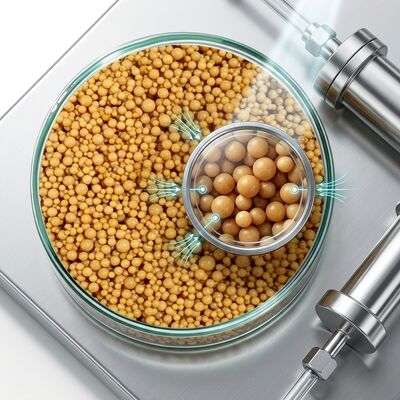
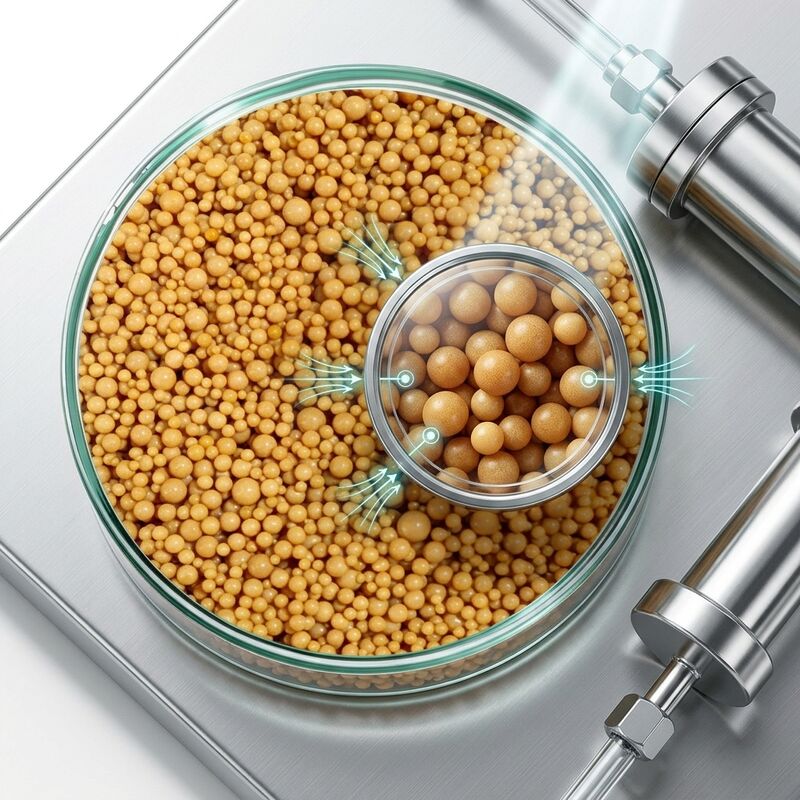
| Appearance: | Maple Opaque Spherical Beads | Matrix: | Crosslinked Polystyrene, Macroporous |
| Functional Group: | Primary Amine | Particle Size Range: | 0.35-1.20 Mm |
| Moisture Content: | 58 +/- 5 % | Shipping Weight: | 0.68 +/- 0.05 G/ml |
| Coefficient Uniformity: | <= 1.5 | Temperature Resistance: | 100 C |
| Toxicity: | Harmless | Packing: | 25 Kg/bag, 40 Bags = 1 Ton Per Pallet |
| Highlight: | Cement Kiln CO2 Capture Resin,Sphelite ASD-35 Primary Amine,Humidity Tolerant Amine Beads |
||
Product Description
Sphelite ASD-35 Primary Amine Resin for Cement Kiln Flue Gas CO2 Capture
Cement plants are one of the hardest decarbonisation targets in heavy industry: kiln flue gas carries roughly 8-15 % CO2 together with dust, alkali vapour and a large amount of water vapour. Sphelite ASD-35 is a macroporous primary amine resin built on a crosslinked polystyrene matrix, so it adsorbs CO2 chemically through the amine group instead of relying on weak physical adsorption, and it keeps working when the gas stream is wet.
Application Scope
ASD-35 suits post combustion capture on rotary kiln and preheater exit gas, tail gas polishing after dust removal, and small to medium skid mounted capture units where a solvent loop is too complex. It also fits CO2 conditioning ahead of compression, liquefaction or utilisation, and pilot columns used to validate capture rate before a full scale retrofit.
Typical Technical Parameters
| Typical Feed CO2 Content | 8-15 % (kiln and preheater exit gas) |
| Gas Temperature Before Bed | Below 60 °C after cooling and dust removal |
| Recommended Bed Depth | 600-1200 mm for pilot columns |
| Appearance | Maple opaque spherical beads |
| Matrix | Crosslinked polystyrene, macroporous |
| Functional Group | Primary amine |
| Particle Size Range (mm) | 0.35-1.20 |
| Moisture Content (%) | 58 ± 5 |
| Shipping Weight (g/ml) | 0.68 ± 0.05 |
| Coefficient Uniformity (≤) | 1.5 |
| Temperature Resistance | 100 °C |
| Toxicity | Harmless |
Why ASD-35 Performs Here
Humidity tolerance
Water vapour competes with CO2 on conventional adsorbents. The primary amine group of ASD-35 still binds CO2 in wet kiln gas, so upstream drying is not mandatory and the capture rate stays stable through seasonal humidity changes.
Low regeneration energy
Desorption runs at a temperature well below the reboiler duty of a 30 % MEA solvent loop, cutting the steam a cement plant has to divert from its waste heat recovery system.
Mechanical strength
Spherical beads with a coefficient of uniformity at or below 1.5 resist crushing and attrition in deep beds, keeping pressure drop and fines generation low across thousands of cycles.
No toxic solvent inventory
A solid amine resin avoids storing and handling large volumes of MEA, so the plant removes solvent make up, corrosion inhibitor dosing and the related secondary pollution risks.
Packing, Delivery & Service
Standard export packing is 25 kg per bag, 40 bags (1 ton) per pallet, with custom drum or big bag packing available on request. Lead time is about 10 working days after payment, and our technical team supports loading calculations, pressure drop estimates and pilot column trials before you scale up.
FAQ
Q1. Does kiln dust shorten resin life?
A: Dust must be removed upstream as with any fixed bed. Once the gas passes a bag filter or electrostatic precipitator, ASD-35 runs for many cycles without measurable capacity loss because the amine group is covalently bound to the matrix and cannot be washed out.
Q2. Can the resin handle fluctuating kiln load?
A: Yes. The bed simply adsorbs until the outlet CO2 set point is reached and then regenerates, so turndown and stop start operation of the kiln do not damage the resin.
Q3. How do we size the bed for our kiln?
A: Send us the flue gas flow rate, CO2 concentration, temperature and target capture rate. Our engineers return an indicative bed volume, cycle time and steam demand, and can supply a pilot quantity for on site validation.
Specifications above are typical values from routine production and can be adjusted to meet a specific project requirement. Please confirm the working conditions with our technical team before ordering.
