


 |
Blast Furnace Gas CO2 Removal Sphelite ASD-35 Primary Amine Resin Macroporous Beads
Product Details:
| Place of Origin: | China |
| Brand Name: | SPHLITE |
| Model Number: | ASD-35 |
Payment & Shipping Terms:
| Minimum Order Quantity: | 1 Ton |
|---|---|
| Price: | Negotiable |
| Packaging Details: | 25 kg/bag, 40 bags = 1 ton on pallet (custom packaging available) |
| Delivery Time: | 10 working days after payment |
| Payment Terms: | T/T, L/C |
| Supply Ability: | 24000 Tons per Year |
|
Detail Information |
|||
| Application: | Blast Furnace And Steel Plant Off Gas CO2 Removal | Typical Feed CO2 Content: | 20-28 % In Blast Furnace Gas |
|---|---|---|---|
| Gas Pretreatment: | Dust Removal And Cooling Before The Bed | Regeneration: | Low Temperature Steam Or Hot Inert Gas |
| Appearance: | Maple Opaque Spherical Beads | Matrix: | Crosslinked Polystyrene, Macroporous |
| Functional Group: | Primary Amine | Particle Size Range: | 0.35-1.20 Mm |
| Moisture Content: | 58 +/- 5 % | Shipping Weight: | 0.68 +/- 0.05 G/ml |
| Coefficient Uniformity: | <= 1.5 | Temperature Resistance: | 100 C |
| Toxicity: | Harmless | Packing: | 25 Kg/bag, 40 Bags = 1 Ton Per Pallet |
| Highlight: | Blast Furnace CO2 Removal Resin,Iron Steel Off Gas Purification,High Mechanical Strength Beads |
||
Product Description
Sphelite ASD-35 Primary Amine Resin for Blast Furnace Gas CO2 Removal
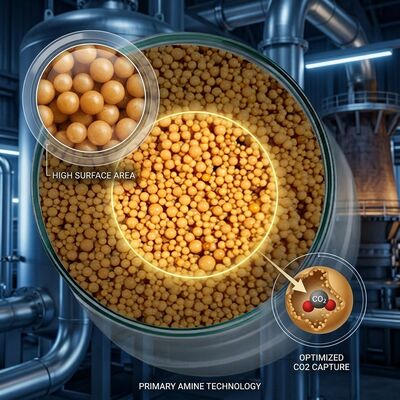
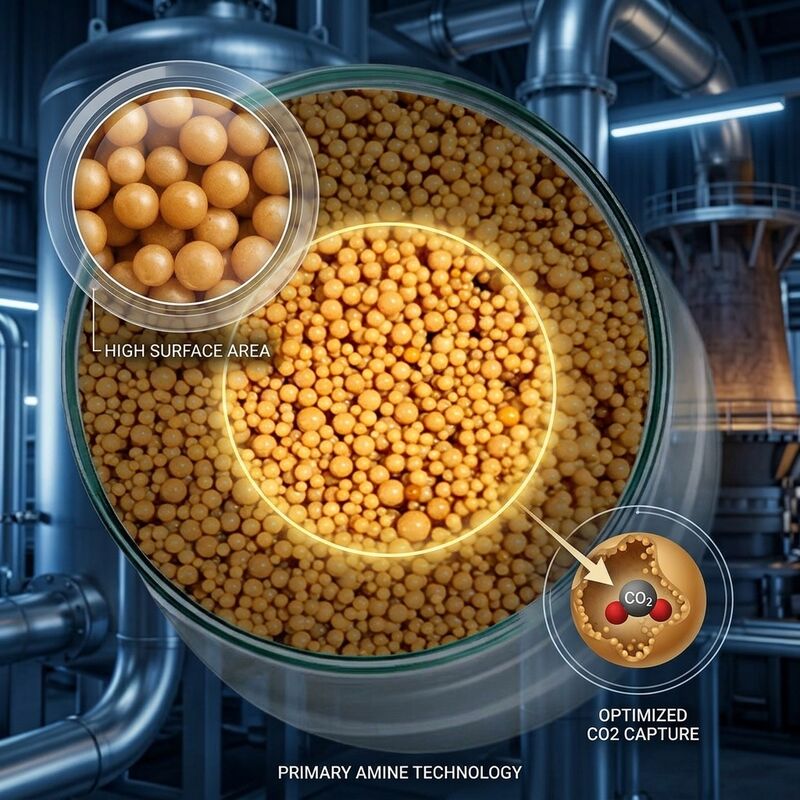
Blast furnace gas carries 20-28 % CO2 together with CO, hydrogen and fine dust, and steel producers are under pressure to clean that gas stream before it is reused as fuel or sent to a capture and storage route. Sphelite ASD-35 is a macroporous primary amine resin on a crosslinked polystyrene matrix that removes CO2 from the dedusted off gas by chemical adsorption, so the calorific value of the remaining gas is preserved for the plant fuel network.
Application Scope
ASD-35 suits CO2 removal from blast furnace top gas, converter and basic oxygen furnace off gas after dust removal, and reheating furnace flue gas in integrated steel works. It is also used in direct reduced iron and coke oven gas conditioning, where CO2 has to come down before the gas is recycled or upgraded.
Typical Technical Parameters
| Typical CO2 Content | 20-28 % in blast furnace top gas |
| Gas Pretreatment | Dust removal to below 10 mg/Nm3 and cooling |
| Regeneration | Low temperature steam or hot inert gas |
| Appearance | Maple opaque spherical beads |
| Matrix | Crosslinked polystyrene, macroporous |
| Functional Group | Primary amine |
| Particle Size Range (mm) | 0.35-1.20 |
| Moisture Content (%) | 58 ± 5 |
| Shipping Weight (g/ml) | 0.68 ± 0.05 |
| Coefficient Uniformity (≤) | 1.5 |
| Temperature Resistance | 100 °C |
| Toxicity | Harmless |
Why ASD-35 Performs Here
Preserves fuel value
Selective chemical adsorption takes out CO2 while leaving CO and hydrogen in the gas, so the cleaned stream keeps its calorific value for the steel plant fuel network.
Strong beads for dusty duty
Steel plant gas is abrasive. Spherical ASD-35 beads with coefficient of uniformity at or below 1.5 resist crush and attrition, keeping fines and pressure drop low in deep beds.
Low regeneration energy
Desorption runs below the reboiler duty of a solvent loop, so the plant spends less steam on capture and can use waste heat from the sinter or coke oven circuit.
No solvent handling
A solid amine resin means no MEA inventory, no reclaimer, no foaming and no corrosion inhibitor dosing in a plant area that is already crowded.
Packing, Delivery & Service
Standard export packing is 25 kg per bag, 40 bags (1 ton) per pallet, with custom drum or big bag packing available on request. Lead time is about 10 working days after payment, and our technical team supports loading calculations, pressure drop estimates and pilot column trials before you scale up.
FAQ
Q1. What dust level does the bed need?
A: Aim for below 10 mg/Nm3 with the gas cooled before the resin bed. Bag filters or electrostatic precipitators already installed on blast furnace gas cleaning normally achieve this without extra equipment.
Q2. Does CO in the gas affect the resin?
A: Carbon monoxide is not adsorbed by the primary amine group, so the resin removes CO2 selectively and the CO passes through for reuse as fuel.
Q3. Can you help with a feasibility study?
A: Yes. Share the gas flow, CO2 and CO content, temperature, pressure and target capture rate, and our engineers return bed volume, cycle time and regeneration steam estimates, with trial quantities to follow.
Specifications above are typical values from routine production and can be adjusted to meet a specific project requirement. Please confirm the working conditions with our technical team before ordering.
